What this compares
Hand soap is the product most households buy without reading anything on it. It sits by the sink, it runs out, another one appears. That makes it an easy category to compare on paper, because every brand in it publishes a full ingredient list on the page, and a hard one to compare at a basin, because nobody publishes anything comparable about how well any of them washes hands. This page does the paper half properly rather than pretending to have done the other half.
We took seven products, six of them from brands that sell themselves on being lower tox, and read each on six things a reader can check from a product page in about a minute: whether the full ingredient list is published there, what that list holds once it is read against our watch list, whether the product puts polyvinyl alcohol down the drain, what a bottle of made-up soap costs, what the packaging is made of, and which third-party marks the product carries. The order is ours, chosen on those readings, and nothing in it turns on how clean your hands come out. We have not washed any.
What we found
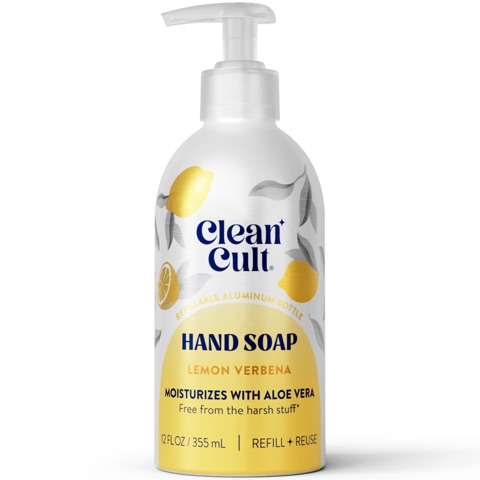
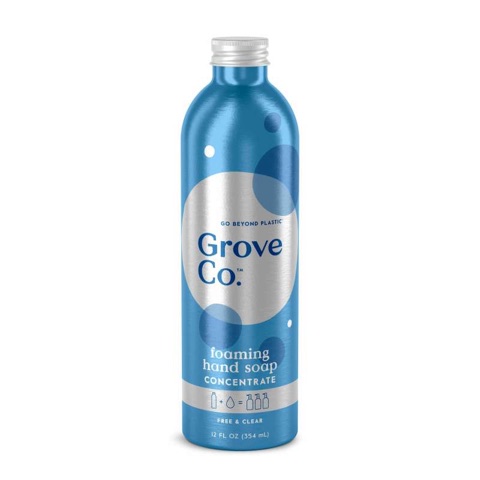
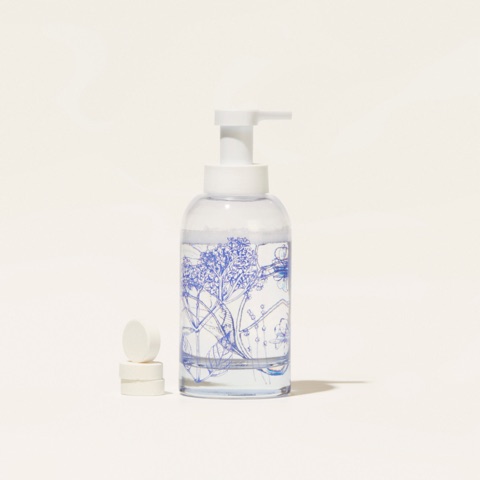
A word first on what a bottle means here, because the formats do not line up on their own. This category sells tablets, powder sachets, ready-mixed liquid and pour-in refills, and the only unit they share is a full bottle of soap ready to pump. A Blueland tablet makes one[4]. A Vove sachet makes one, in 350 ml of warm water[1]. A Cleancult or Method bottle is one, at 12 fl oz[5][8]. A Grove refill fills one, at 12 fl oz[6]. Blueland and Puracy publish no bottle volume at all, so the row is comparable in what you get rather than in millilitres. We would rather say that than quietly imply a precision the pages do not support.
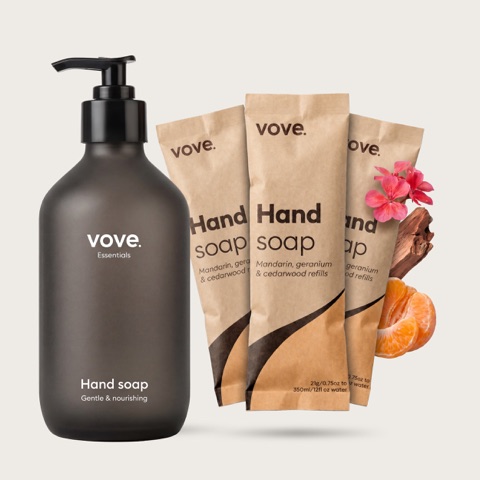
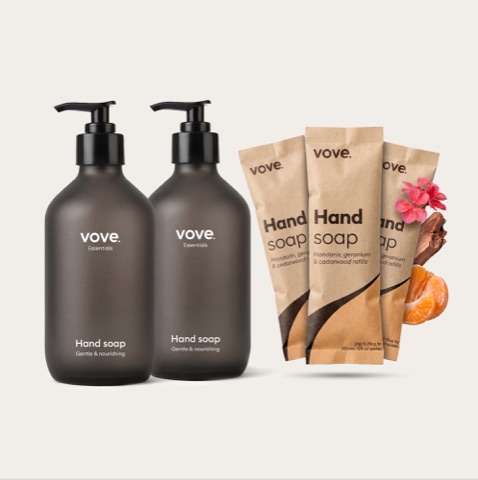
The Vove two-pack holds our top card, and this site is owned by Vove, so the reason is worth stating precisely. It publishes its full list like everything else here and it is film-free like everything else here, so neither of those rows separates it. What separates it is the read of the list itself: mandarin, geranium and cedarwood oils, named, against the bare Fragrance entry Blueland prints[2][4]. It carries no third-party certification at all, where four products here carry a mark, and one product in the table costs less per bottle. It takes one row and is beaten on two.
Two rows do nothing at all in this category, and that is worth saying before anyone quotes this table at anybody. Hand soap is a liquid or a loose powder. There is no dose to hold together, so there is no dissolving film, and every product takes the top band on polyvinyl alcohol and microplastics. Each of them also publishes a full ingredient list on its own product page, so the transparency band is identical the whole way down that row too. That leaves the read of the ingredients, cost, packaging and certifications to decide the order between them. We are not going to swap the criteria around to make a category look busier. They are fixed before the research starts, and when every brand behaves itself on a criterion, the honest thing is to say so and let the rest of the table decide.
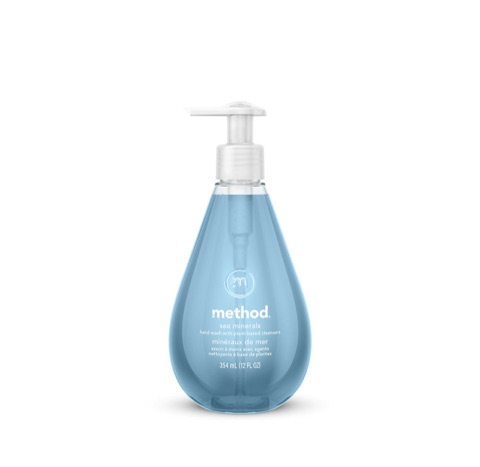
Method, the SC Johnson brand and the incumbent here, sits at the bottom of our order, and it takes the cost row outright at $3.79 a bottle, where no product in this table undercuts it. SC Johnson publishes a complete ingredient list on its own product page[8], which is all the transparency criterion asks, so it takes the same band as the refill brands. The two rows that are left are both losses: a single-use pump bottle takes the bottom packaging band whatever the bottle is moulded from, and the list it publishes takes the concern band.
The criterion this page once said it was missing now exists, and it is the one that moved the order. Every list here was read against a fixed watch list with two tiers, and only the upper tier drops a product into the concern band. Blueland and Method are the only products that land there, both on a fragrance published with no components named, and Method adds sodium lauryl sulfate and the dyes Blue 1 and External Violet 2 underneath it[4][8]. Everything else in the table carries lower-tier entries only, which reorder nothing between themselves. That single row is the difference between the top of this table and the middle of it.
On disclosure of the scent itself, the order is almost reversed from the certification row. Cleancult names its fragrance allergens, Limonene, Citral and Linalool, inside the ingredient list[5]. Grove marks the allergen-bearing fragrance in its list and sells a Free and Clear version[6]. Blueland sells a fragrance-free version, though the starter set scored here is not it and its list prints Fragrance as a bare word[4]. Vove names its essential oils, mandarin, geranium and cedarwood, and declares no allergens against them[1]. Method writes FRAGRANCE (PARFUM) and stops[8]. All of that is what decided the top of this table. Vove sits at the top of that order on a technicality of disclosure rather than of chemistry: naming an oil is not the same as proving it mild, and we go on what is printed.
The Vove starter set sits mid-table, and both reasons are printed in its row. It carries no third-party certification of any kind, where four products here carry a mark[1]. At $6.33 a bottle it is 67 per cent dearer than Method, with four products in the table costing less. The two-pack does better on cost for a single reason: six sachets spread the price of the glass over more soap[2].
The repeat purchase is where a refillable brand is supposed to win, and Vove loses that row. After the starter set, Vove refills are $14.00 for three sachets, which works out at $4.667 a bottle[3]. Blueland refill tablets are $2.25 each[4]. On the purchase the whole format exists to justify, Vove is more than double the price of the product it sits above on this page, and that gap is invisible in the starter set row where most readers will stop reading. A lower-tier ingredient read is cheaper to achieve than a certification stack, and it is not the same thing as being cheaper to live with.
Two claims on the Vove pages are not carried by the lists printed below them. The starter set is badged plastic-free on a product whose glass bottle has a pump, and the page itemises neither the pump nor the sachet[1]. The two-pack overview says the soap is softened with aloe vera, glycerin and a prebiotic, and the ingredient list further down that same page names no prebiotic[2]. Neither moved a band. The rule we applied is the one that dropped Cleancult in the dishwasher table: the contradicted band needs a page to assert the opposite of its own list about the same thing, and a claim that is merely unsupported by the list is not that. Both are worth knowing before you check the pages yourself.
Grove sells a refill for a dispenser it does not include. The aluminium bottle is recyclable and one-way: you pour it into Grove’s own foaming dispenser, sold separately, and put the bottle out for recycling[6]. That takes the middle packaging band rather than the top one, on the same rule that put Dirty Labs in the middle band in the laundry table. At $8.99 a bottle it is also the dearest soap in this table, 2.4 times Method, and the free-from line the page leads with is Grove’s own internal standard rather than a third-party mark.
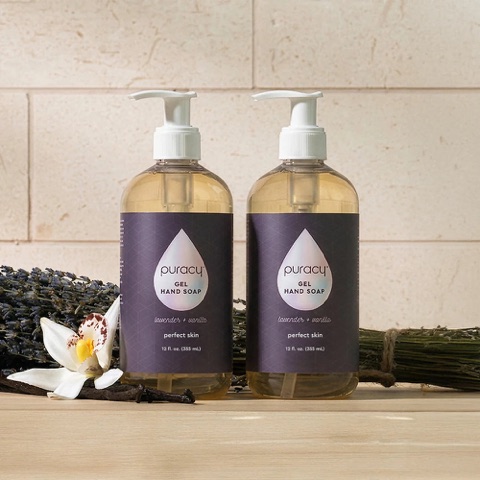
Puracy is in the table with a blank cell, and we would rather explain it than leave it unexplained. The page publishes a full ingredient list for every scent, which is more than most manage, and it never describes the packaging or states a bottle volume[7]. That cell therefore reads Not scored, and the product takes no card on this page rather than being placed on a row nobody published. Molly’s Suds gets the same treatment on the laundry page.
One format that used to define this category has no column at all. In 2016 the FDA issued a final rule removing triclosan, triclocarban and seventeen other active ingredients from over-the-counter consumer antiseptic washes, hand soaps and body washes used with water among them, on the ground that manufacturers had not shown them safe for long-term daily use or any better than plain soap and water[9]. The agency’s standing consumer advice since then is plain soap and water[10]. The antibacterial bottle under the sink is no longer a live comparison, and nothing on this page turns on killing anything.