What this compares
A dishwasher tablet is a dose. A squeeze of washing-up liquid is not: you squeeze until the water looks about right, which is why no brand in this category will tell you what a wash costs, and why an aisle that looks simpler than the one beside it turns out to be the harder one to compare. It is also the aisle where the low-tox shelf and the supermarket shelf agree about the chemistry more than either of them lets on.
We took seven dish soaps a US shopper can buy today, six of them from brands that sell themselves on being lower tox, and read each on six things anyone can check from a product page inside a minute: whether the full ingredient list is published and where, what that list holds once it is read against our watch list, whether the product contains polyvinyl alcohol and admits it, what the soap costs by volume, what the packaging is made of, and which third-party marks it actually carries. The order that follows is ours, chosen on those readings, and nothing in it turns on how clean the dishes come out. We have not washed any.
What we found
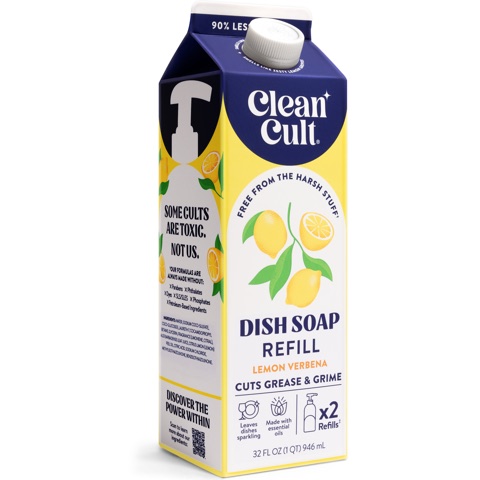
Cleancult is the best-documented product on this page and the cheapest soap here by volume, and it does not hold our top card. The full ingredient list is on the product page, there is no film anywhere near it, the refill arrives in a paper-based carton the page calls 100 per cent recyclable, and at $0.28 a fluid ounce nothing here undercuts it[4]. The ingredients row is where it gives ground: methylisothiazolinone and benzisothiazolinone close its own list, both upper-tier watch list entries, so it lands in the concern band on the reading we lean on hardest. Certification is the other gap. A magazine award is the whole of it, against the EPA Safer Choice and Cradle to Cradle marks Blueland carries[3][10].
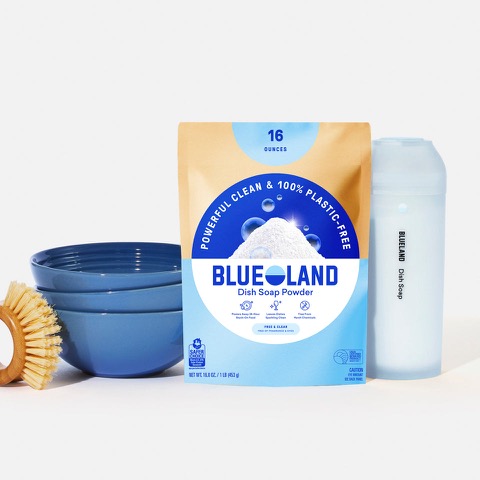
The strongest paperwork on this page belongs to a product that holds no position at all. Blueland takes no card here because its dish soap is a powder you shake straight onto a wet sponge: no bottle of made-up soap comes out of it, so there is no volume to price[3]. That is a limit of our unit rather than a fault in the product, which is exactly why the cell says Not scored instead of carrying a low number. Placing a product on the rows it did fill in flatters whichever brand published least, so a product with a blank cell keeps its facts and loses its place in the order. That applies to five of the seven products here, which describes this category better than any ranking does.
No product on this page contains polyvinyl alcohol, and that is nobody in particular’s achievement. Hand dish soap has no film holding a dose together, so the row that separates the dishwasher aisle is flat the whole way down this table, the supermarket bottle included[7][8]. It does no work at all here. We have left it in and printed it anyway, because a criterion that bites only when it suits us is not a criterion.
The two products this site’s owner sells both publish their full ingredient list on the product page, with the origin given for every entry, which is more than most pages here manage. That is the top transparency band, the same band Cleancult, Puracy and Blueland hold. Both pages were read again on 21/08/2026. What sits inside those lists is a separate row, and on that one neither carries anything beyond the botanical oils it names.
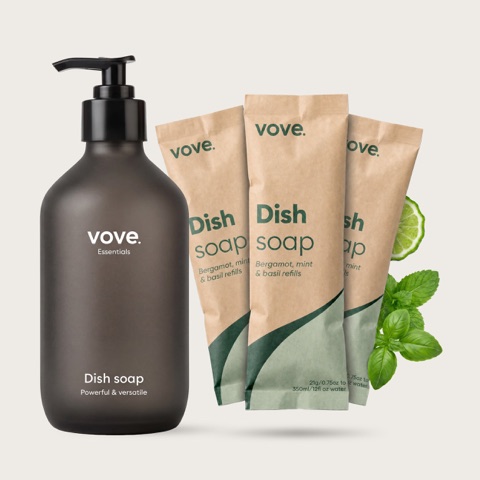
That leaves the starter set and the bar, both ours. The starter set holds the top card on this page, and the reason is the format rather than the price: a glass pump bottle you keep, refilled from paper sachets of powder, so what ships is a palm-sized sachet instead of a ready-mixed bottle that is mostly water, at a fraction of the shipping weight and volume[1]. Its list carries nothing from the watch list beyond the botanical oils it names, where Cleancult’s ends in two isothiazolinones. Against that, it is 88 per cent dearer than Cleancult per fluid ounce once the water is in, and the $19.00 buys the glass bottle once as well as the soap, which is where a good part of that gap sits. A bar of soap ships small too, so this is our reasoning rather than a law of physics, and the site making the argument sells the bottle.
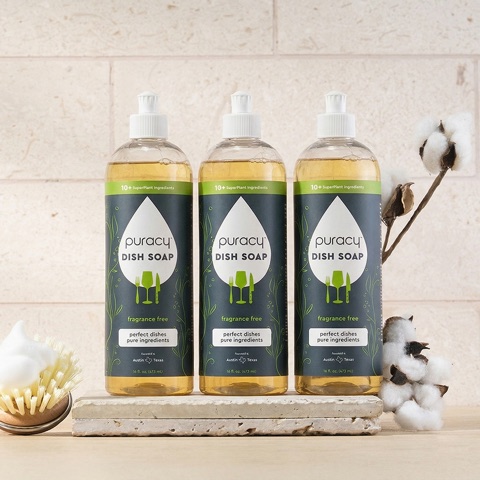
Nobody in this category publishes a dose, so cost per wash does not exist as a number and we are not going to invent one. Puracy is the only page that answers the question at all, and it answers in sinks: 160 sinks a bottle, without ever saying how large the bottle is[5]. Vove’s starter set is the only other page that quantifies anything: one 21 g sachet makes 350 ml, about 12 fl oz, and lasts two to three weeks of daily washing up[1]. No Tox Life is asked directly on its own page, under the heading How long it lasts, and answers Varies depending on usage[6]. That is the honest answer, and it is no use at all for a price. So the only comparison available is by volume, and only for the liquids: what a fluid ounce costs once any water you add is in the bottle. Cleancult at $0.28 against the Vove starter set at $0.53, and nothing else here can be put on that line. Those ounces are not the same amount of cleaner: the Cleancult figure is the concentrate as the carton is sold, and the Vove figure is soap once a sachet has been made up with water, so each cost per fluid ounce is divided by the volume that brand itself states it yields rather than by any common strength we have assumed.
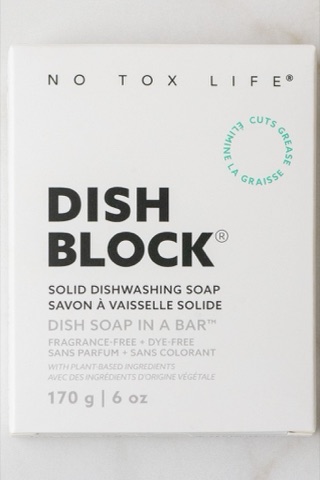
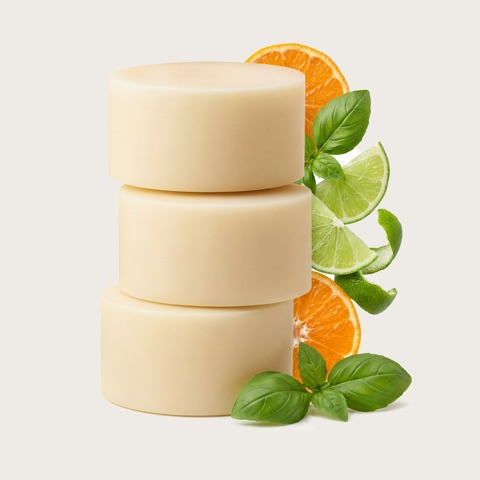
Neither bar says what it comes wrapped in. No Tox Life and the Vove bar both take no card for the same two blanks: no volume to price and no packaging described[2][6]. Both are plainly low-waste objects, a bar of soap being the least packaged thing in this comparison, and we go on what a page says rather than on what an object obviously is. A page that shows an FSC logo as a wordless icon and never says whether the wrap is paper has not described its packaging, and that sentence is about the bar this site’s owner makes.
No Tox Life takes the top transparency band with a list that names ingredient classes rather than ingredients: sodium ester salts, cocoyl alkyl sulfonates, alkyl polyglucosides[6]. That is a genuine limit of the criterion, and we would rather point at it than quietly rescue the row. The band asks whether a full list is published on the product page and whether the page contradicts it. It does not ask how precise the list is, so a list of families reads the same to us as a list of INCI names, and a reader should know that before reading anything into the transparency row.
Read the lists against the watch list and one preservative family decides the top of this page. Cleancult ends with methylisothiazolinone and benzisothiazolinone[4], Puracy carries benzisothiazolinone[5], and Dawn carries methylisothiazolinone[8]. Isothiazolinones sit in the upper tier, so all three land in the concern band on the reading we lean on hardest, and Dawn puts an undisclosed fragrance, three synthetic colourants, a styrene acrylate copolymer and an antibacterial in the same column. The rest of the table is lighter. No Tox Life is the only list here with nothing on the watch list at all, Blueland is marked down for sodium lauryl sulfate alone, and both Vove entries only for the essential oils they name, all of which are lower-tier findings. What that does to the order is narrower than it looks, because the concern band fell on the products with the price or the paperwork to argue back. What we will not do is dock a product for promising no harsh chemicals, which is what the Cleancult page promises on the same screen as that list. A phrase with no definition cannot be checked, so it cannot move a row.
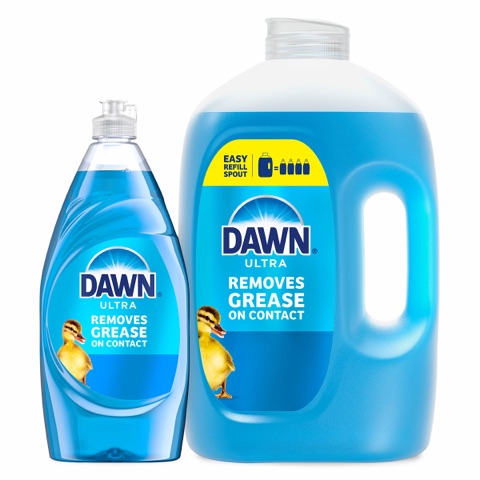
Dawn is the incumbent, and it takes no card for want of a price. Procter and Gamble does publish the complete list, on an ingredients page shared across the whole Dawn range rather than on the product page[8], while the product page itself carries a size selector running from 5.8 oz to 67 oz with no price against any of them[7]. What the list holds is the actual argument for the shelf next door: sodium lauryl sulfate and sodium laureth sulfate, chloroxylenol, methylisothiazolinone, and three colourants named Blue 1, Yellow 5 and Red 33. Not a film in sight, and no third-party mark either.
A brand that appears in most low-tox dish soap roundups has no column here. Ethique’s US catalogue, pulled from its own store feed on 14/08/2026, is personal care from end to end, shampoo and conditioner bars, face and body care and a dog shampoo bar, with no dish soap or washing-up bar of any kind in it[9]. Its dishwashing bar is not something a US shopper can buy, so there is nothing to compare and no row to fill.