What this compares
This is the shelf where the film argument runs out. A booster is loose powder in a tub, a bag or a pouch, and a stain remover is liquid in a bottle, so there is nothing to hold a dose together and nothing to dissolve in the drum. The question that decides our dishwasher and detergent pages barely arises here. That turns out to be useful: with the loudest criterion silent, what is left is the plain question of what a brand is willing to print next to its own claims.
We took six products and read each against the things a reader can check from a product page in a couple of minutes: whether the full ingredient list is published and where, what that list holds once it is read against our watch list, whether the formula contains a polymer and whether the page admits it, what a load costs, what the pack is made of, and which third-party marks the product carries. Nothing here turns on stain removal. We have not removed any stains, and a page that ranked on the thing it had never seen would be worth less than this one.
What we found
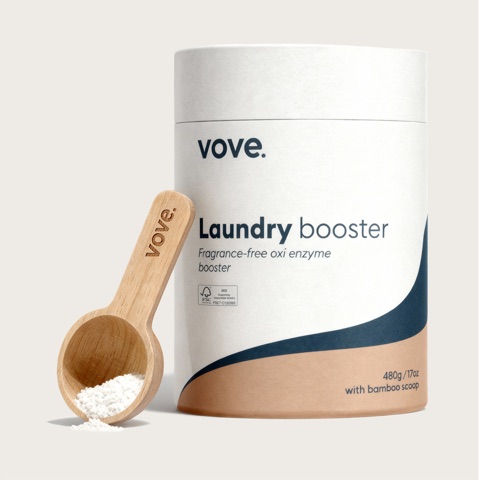
The Vove booster is our choice in this category, and this site is owned by Vove, so the case for it is printed rather than asserted. The formula is on the product page with every entry named and marked mineral, natural or synthetic, the four enzymes are given as protease, amylase, lipase and mannanase, the chelator is GLDA rather than a phosphate or a borate, and nothing in the list matches the watch list at either tier[1]. It also takes the cost row at $0.19 a load and the packaging row is a kraft pack with a bamboo scoop. What it does not have is a mark of any kind: it carries nothing on certification, where three products here carry more, and that is the row it would have to fix to hold the top of this page on anything more than paperwork.
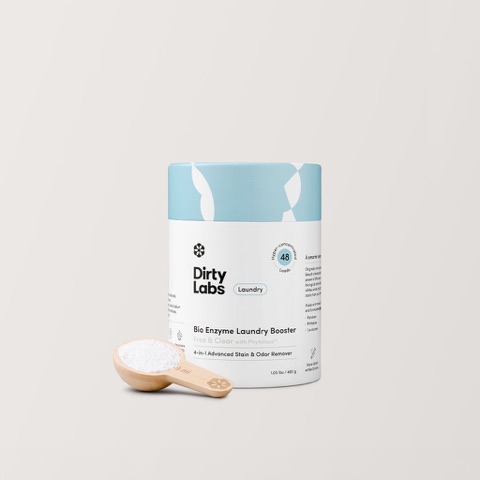
We put Dirty Labs next. Every one of its nine ingredients carries a CAS number on the product page, the branded Phytolase enzyme is written out as deoxyribonuclease rather than left as a trade name, and it holds EPA Safer Choice, USDA Certified Biobased and Green Seal, all of which certify the product and not the company[3][8]. Its list is as clean against the watch list as the one above it, so what separates them is price and pack: $0.32 a load, the dearest here that publishes a load count, and a tube described as recyclable without ever saying what it is made of. It is also a much smaller brand than the incumbent on this page, and where a small brand publishes as much as a large one we lean towards the smaller. That is our stance rather than a neutral rule, and it is stated here so you can discount it if you disagree.
The cheapest-load claim rests on a figure Vove has not broken down. The page says up to 80 loads per container and gives no dose weight[1]. Dirty Labs states 48 loads and Branch Basics says enough for 64, both without an up to[2][3]. Run it backwards: the tub has to deliver at least 50 loads to keep the cost row, and below that Branch Basics takes it. We have used the published number because we use published numbers everywhere, and we are flagging that this one is the softest of the three and sits on the product we sell.
Certification is the widest spread on the page and the row we come last on. Dirty Labs is the strongest on it, on EPA Safer Choice, USDA Certified Biobased and Green Seal. Branch Basics displays EWG Verified, MADE SAFE and Leaping Bunny on its page[2], and EWG Verified and MADE SAFE are genuine certifications of the product rather than badges about the company. The marks we count for most were fixed before any of this was researched, and they are EPA Safer Choice, Cradle to Cradle, Green Seal and USDA Biobased, so nothing Branch Basics displays is on that list, and it stays behind Dirty Labs on this row. That is a limit of how we read the row and we would rather name it than quietly patch it mid-series. Vove carries nothing at all: no mark of any kind appears on the booster page[1].
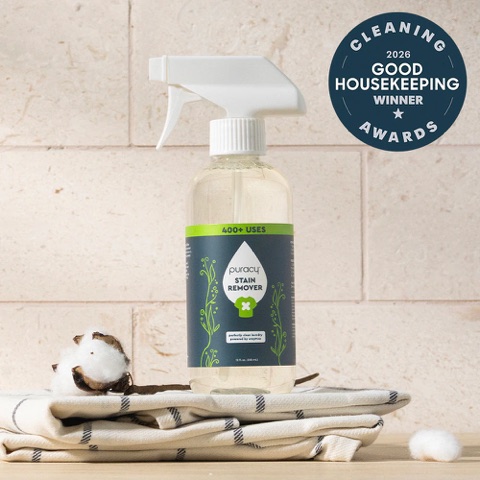
Puracy is where the temptation to derive a figure was strongest, and we have not. Its stain remover publishes the longest ingredient list here, with a function written out for every entry[5]. What it does not publish is a dose count for the bottle we priced. What it does publish is a use claim attached to a different size: one 16 oz bottle treats over 500 stains, and a 48 oz pouch handles 1,500[5]. Divide the 16 oz price by that claim and a stain costs a fraction of what a load costs anywhere in this table. Every powder here would fall behind the spray on cost, the product we sell would lose the row it takes, and the top of the table would go with it. We still have not done it, for two reasons worth keeping apart. A stain is not a load, so the column would stop comparing like with like. And an over is a floor, not a count. Weigh both against the fact that leaving that cell empty is also what keeps a Vove product on the cheapest row.
The same Puracy page is where the transparency row bites hardest. The bottle is sold as Unscented, the ingredient section is headed Free and Clear, and the last entry in the list is Citrus Paradisi peel oil, described a line below as an essential oil that delivers a bright, zesty citrus burst for a refreshing and uplifting sensory experience[5]. The likely explanation is an ingredient glossary written once and reused across a range that includes scented products, and the oil may well be in there to cut grease rather than to smell of anything. It still leaves the option name and the ingredient list telling a shopper different things about the same bottle. That is what we mark as contradicted, and Puracy is the only product on this page in that state. Its list also carries sodium borate and benzisothiazolinone, both upper-tier watch list entries, so it is flagged on ingredients as well. None of it changes the order, because a product with no cost per load was never going to place.
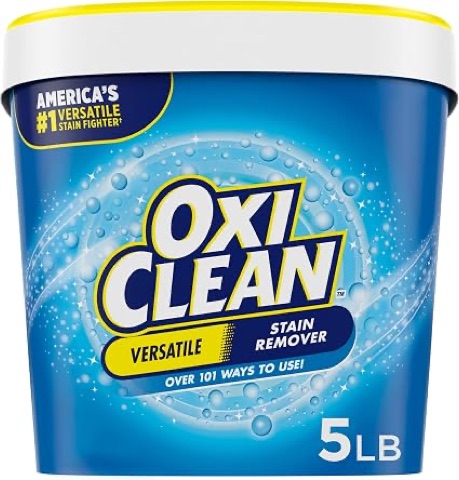
The most structured ingredient disclosure in this category belongs to OxiClean, which is not where we expected to end up. Its product page publishes no ingredient list, no price and no pack size[6]. The list lives on the Church and Dwight corporate site as a disclosure form, with a CAS number and a stated function for every entry, a column recording whether each one sits on a designated regulatory list, and a disclosure date of 26/01/2026[7]. It names sodium carbonate, sodium carbonate peroxide, a C10-16 alcohol ethoxylate surfactant, fragrances, sodium chloride and a colourant whose CAS number is withheld as confidential business information[7]. Published by the brand, absent from the page a shopper lands on: that is off-page disclosure, and with no price and no pack size on the brand’s own product page there is nothing to place it against. One detail in its favour, since counts get repeated carelessly in this trade: the widget reports 22,521 reviews at 4.6, and the star breakdown printed under it adds to the same total, so the number belongs to this product rather than to a whole line[6].
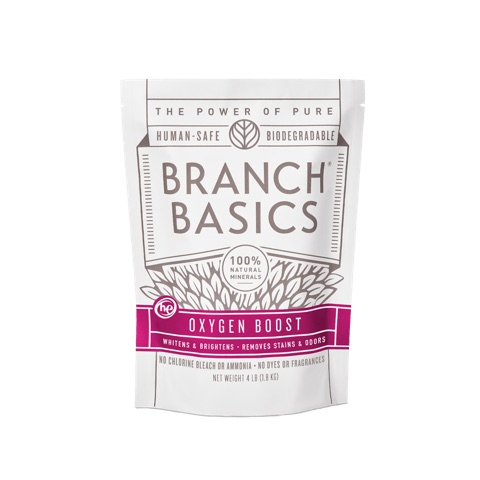
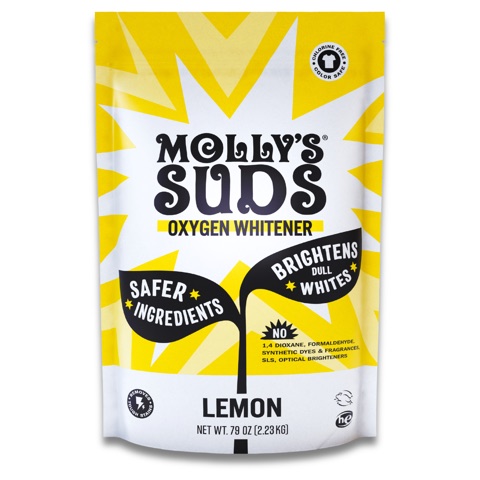
Branch Basics publishes the shortest formula on this page, sodium percarbonate and sodium bicarbonate, neither of which appears on the watch list, and then prints a sentence no other brand here prints: the formula is biodegradable but the packaging is not[2]. We have put the pouch at the bottom of the packaging row, which is what a plastic pouch with a plastic scoop inside it earns, and the mark-down is only possible because the brand said so out loud. Molly’s Suds runs the other way. Three of its four entries carry CAS numbers on the page and the fourth is pure essential oils and/or natural fragrances, which is a lower-tier watch list note rather than a bare parfum[4]. The pack is called a bag, in two sizes, and never described further. There is no load count and the dose is one to three scoops, so pack weight would not produce one either. Cost per load and packaging both stay blank, so it sits below the products whose pages answered every column. A brand that published less does not get the benefit of that here, and a product with cells we cannot fill is never named in a verdict.
One limit matters more here than anywhere else on this site. A stain remover is bought to remove stains, and this page does not tell you how any of these do it. Nothing here has been near a grass mark or a tea ring, and every judgement above comes from what a brand chose to print. Whether the enzymes in the Vove tub beat two mineral ingredients in the Branch Basics pouch on a shirt collar is the question a buyer actually walks in with, and this page does not answer it. If that ever changes, how we did it goes up before any conclusion does.