What this compares
The plastic jug is out, the paper sleeve is in, and a sheet that arrives in a cardboard envelope reads as the clean option. This is the category where the low-tox shelf and the mainstream shelf have swapped places without most shoppers noticing. What holds a lot of those sheets together is polyvinyl alcohol, the same synthetic polymer that forms the film on a conventional pod.
We took ten products and read each on six checkable things: whether the full ingredient list is published and where, what that list holds once it is read against our watch list, whether the product contains polyvinyl alcohol and whether the product page admits it, what a load costs, what the packaging is made of, and which third-party marks the product carries. The order that follows is ours to defend rather than a total we added up, and nothing in it turns on how clean the clothes come out, because we have not washed any.
What we found
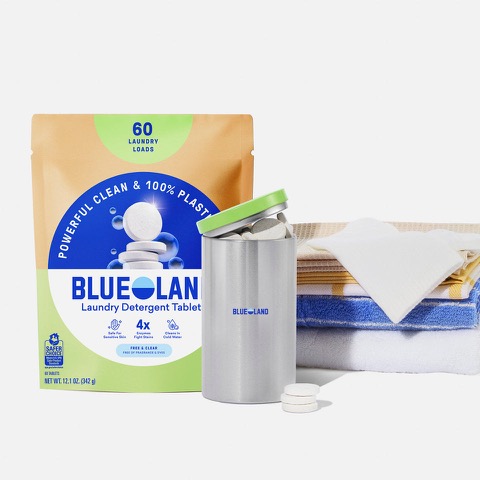
Blueland holds the top card on this page and we put it there: a full ingredient list on the product page with nothing in it the watch list catches, a pressed tablet with no film, a steel tin refilled from compostable paper, and the heaviest certification stack here, EPA Safer Choice and Cradle to Cradle on top of company and welfare marks[3]. It does not take the cost row. At $0.38 a load it is 2.0 times the cheapest product in the table.
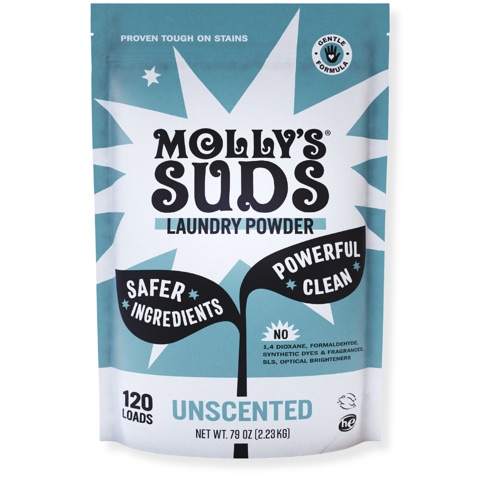
Molly’s Suds is the strongest thing on this page that holds no position at all. Its loose powder has five named ingredients with CAS numbers, nothing from either tier of the watch list, no film, and the cheapest load in the category at $0.19[10]. The product page never describes the packaging, and we will not place a product on a row nobody published, because that flatters whichever brand published least. A product with a blank cell keeps its facts in the table, holds no position and cannot be named in a verdict. That rule is applied to Vove on this page too.
Read against the watch list, this table divides on fragrance rather than on format. Blueland, Molly’s Suds and both Vove tablets carry nothing from either tier, and the Vove pair arrived there on 25/08/2026 rather than by reformulating: the watch-list entry for PEG and ethoxylated compounds was retired that day, and the PEG 8000 binder stopped counting against our own carton. Dirty Labs, Tru Earth and Tide carry an upper-tier entry, and in each case it is the same thing, a bare fragrance line with nothing itemised behind it; Tide adds an optical brightener, an acrylic copolymer and shading dyes to that. The rest carry lower-tier entries only, sulfates and declared fragrance allergens. That reading is the one we lean on hardest, which is why Dirty Labs, whose disclosure is otherwise the most complete here, sits mid-table rather than at the top.
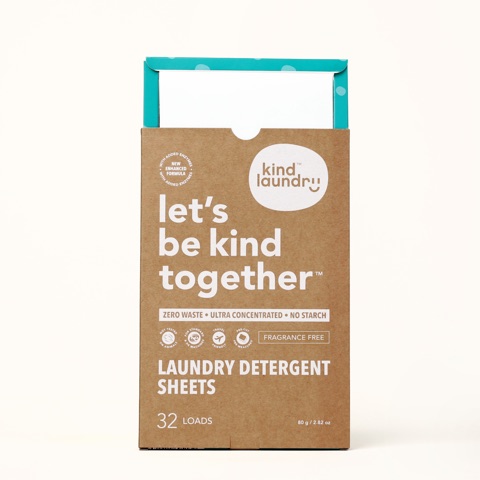
Five of the products here contain polyvinyl alcohol, and each of them puts it somewhere different. Kind Laundry markets “only 4 simple ingredients” and “free of petroleum” on the product page, and the third of those four ingredients is “Polyvinyl Alcohol (biodegradable polymer)”, a petroleum-derived synthetic[11]. The list is on the page, which is more than the other sheet brands manage, and a claim and its own ingredient list still should not disagree in the same scroll. That is the undisclosed-contradiction band, and it is why Kind Laundry reads worse on transparency than a brand that simply prints its list and says nothing.
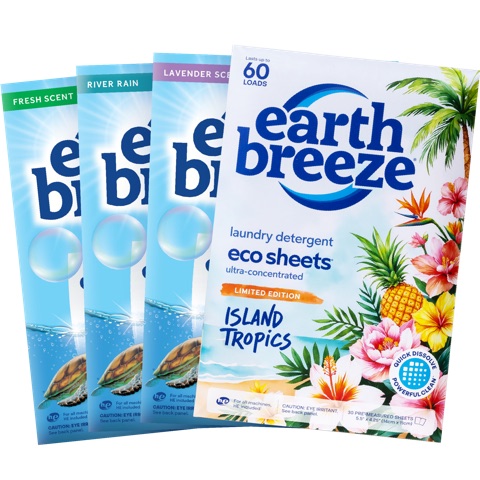
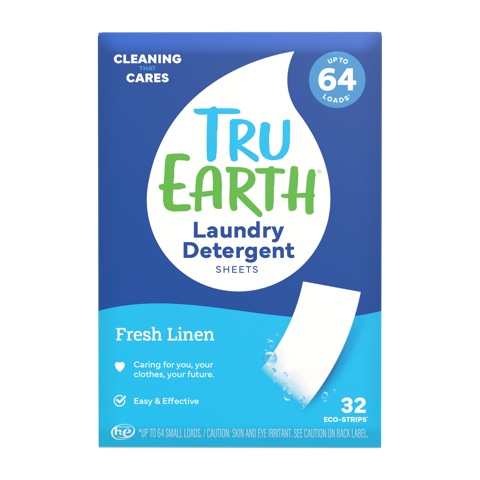
Tru Earth puts polyvinyl alcohol second in its ingredient list, above every surfactant, with the stated function “structuring agent”. That list lives on a separate ingredients page; the product page carries no ingredient list and never uses the word[5][6]. Earth Breeze goes further. No ingredient list appears on its product page at all, and polyvinyl alcohol is findable only in the help centre, which confirms it as a structuring agent that holds the cleaning ingredients until they dissolve, on the same site that runs a dedicated article arguing the sheets do not contain microplastics[7][8]. Both take the middle band on transparency and the bottom band on PVA, because the question we ask is what the product page tells you.
None of that makes polyvinyl alcohol a poison, and we will not imply it. The 2021 Arizona State University estimate that much of the PVA reaching US wastewater treatment survives it was funded by a competing format and has been contested[14]. The US EPA, meanwhile, keeps detergent-grade polyvinyl alcohol on its Safer Choice list of lower-concern ingredients[15]. The argument is live and we are not going to close it for you. What we judge is narrower: whether the product page tells you the polymer is in there, which is a question with an answer.
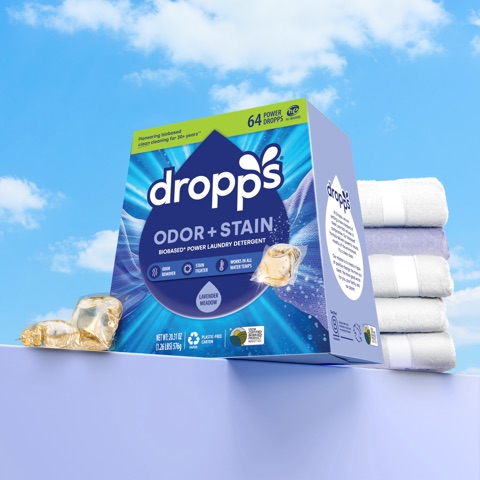
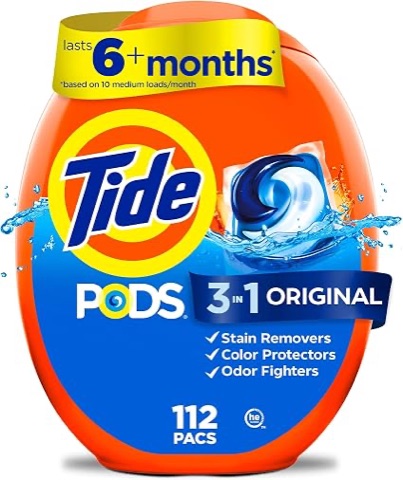
Dropps is the counter-example. Its film is polyvinyl alcohol, its ingredient list says so in plain words, and the page does not route around it[4]. That earns the middle band on PVA rather than the bottom one, and what keeps it in the middle of this page is the film counting as a wrapper on the packaging row. Tide contains polyvinyl alcohol twice over, in the liquid and as the pac film, and its ingredient list had to be read off a third-party transcription because Procter and Gamble’s own SmartLabel pages return nothing to a fetch[12][13]. It takes no card whatever we make of it: tide.com is not a shop and publishes no price.
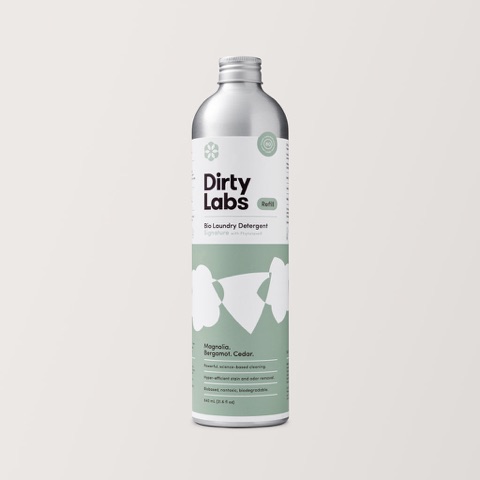
Dirty Labs publishes the most complete disclosure in the table, a CAS number against every entry, and a liquid in an aluminium bottle has no film by construction. Every mark on the page is a product certification rather than a company one: USDA Biobased at 100 per cent, EPA Safer Choice and Green Seal[9]. It still sits below brands with thinner disclosure, and the watch-list read is why. The Signature variant ends in a bare fragrances entry, and the page’s claim that the scent is free of every EU-listed allergen names no components at all, so it is read as undisclosed and takes the bottom ingredients band. The middle packaging band for a one-way bottle and $0.35 a load do the rest.
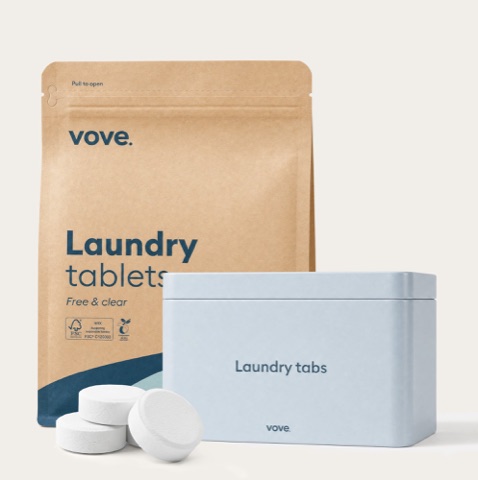
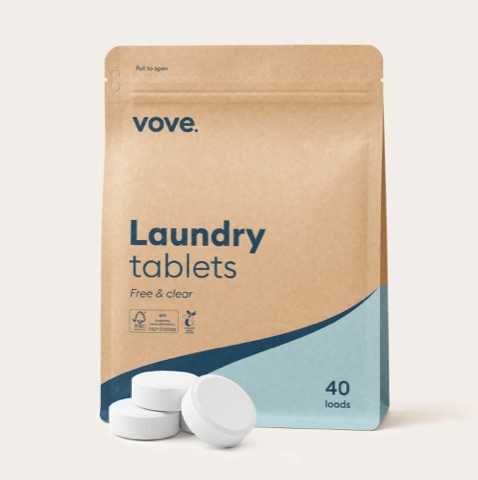
Vove’s two entries sit behind Blueland, and we put them there. Both publish a full ingredient list, neither carries a film, and the carton takes the cheapest load of any film-free product that can be placed, which is the second card on this page. Both now come through the watch list clean, and they got there on a rule of ours rather than on a change to the tablet: PEG 8000, the tablet binder, was a lower-tier watch list entry until 25/08/2026, when the entry for PEG and ethoxylated compounds was retired for every product in every table at once[1][2]. The reasoning is published in the watch list, the retirement applied to everyone else on the same day, and it still worked in our own favour, which is worth saying on the page it worked on. Certification is the row that goes against us, with five products here carrying more than an FSC mark on a carton, and at $0.30 a load the carton is 57 per cent dearer than Molly’s Suds powder.
One thing no detergent on this page fixes. Most of the plastic leaving a washing machine comes from the clothes rather than from the bottle: a single 6 kg wash of synthetic fabric can shed more than 700,000 microfibres[16]. Changing format does not touch that, and any page implying otherwise, ours included, would be wrong.