What this compares
A konjac face sponge is a small pale hemisphere that sits on a bathroom shelf looking like a bar of soap and behaves like a jelly once it has been under a tap. It came out of Korean skincare, where it has a long history, and arrived in the United States as the answer to the plastic scrubbing bead: a thing that exfoliates without a polymer in it. That is a claim about material rather than about skin, which makes it the sort of claim this site can actually check.
We took six face sponges and read each on the same six criteria this site uses everywhere. A sponge carries no ingredient panel, so the polyvinyl alcohol row is read on material shedding: plant fibre throughout is the answer we want, a named synthetic with nothing said about shedding is the answer we do not, and a page naming no material at all is treated the same way, because silence cannot be checked. The ingredients-of-concern row reads whatever material list a page does publish against the site’s watch list. The order below is our editorial choice, argued product by product rather than produced by a calculation, and where a brand is new or small we say so and give it the benefit of the doubt. Nothing here is a judgement on pores, blackheads, oil or texture. No face has been washed for this page and no laboratory work has been commissioned.
What we found
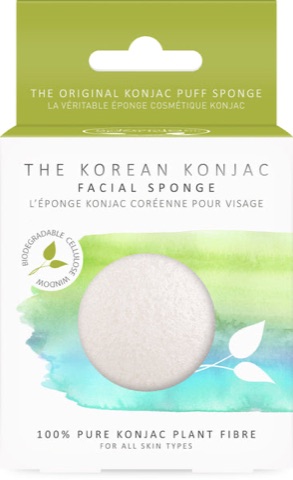
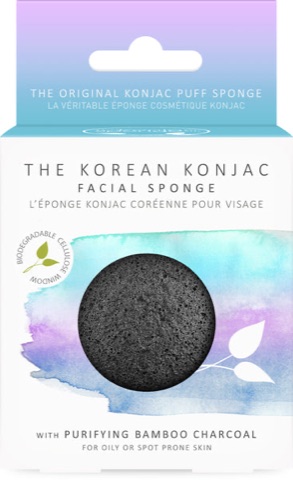
The Konjac Sponge Company writes the fullest disclosure in the category and writes it twice. The pure sponge page gives the sponge as a mixture of konjac vegetable fibre and spring water, and the charcoal sponge page adds charcoal powder as the only other component[2][3]. Both pages then do the thing almost nothing else on this shelf does: they describe the pack, as FSC certified board with a window made from cellulose acetate, and say the window is biodegradable. A packaging statement that names the material of the window is a level of detail this site has seen from very few brands in any category.
Vove describes its pack as well, an FSC-certified card box with the sponges loose inside[1], and after that the packaging cells run out. Three of the six sponges carry no packaging description, and a sponge whose page will not say what it arrives in is one we will not place, so only three sponges could be ranked at all. It is the same finding as the body sponge and baby sponge tables, from a different set of brands, which suggests it is a habit of the category rather than an accident of which pages we happened to open.
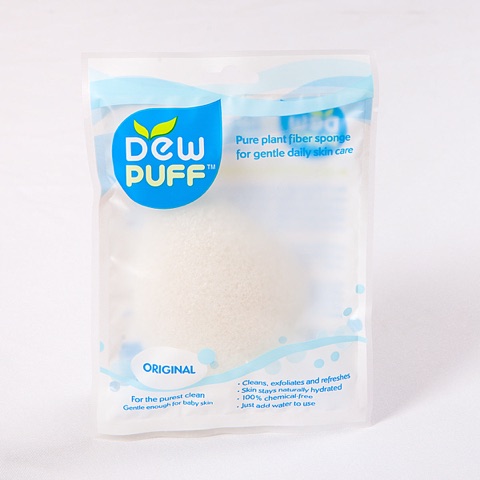
Dew Puff is the shortest product page this site has scored. The whole listing is a price, a photograph and two sentences, one of which says the sponges clean without drying out your skin and the other of which says they are gentle enough for a baby[6]. The material appears once, inside the phrase natural konjac sponges, and there is no ingredients section, no packaging line, no certification and no lifespan. For a single-material article the phrase is technically a complete material statement, so it takes the top band on that row, and it is the thinnest version of one anywhere on this site. The listing was also marked sold out on the day of checking.
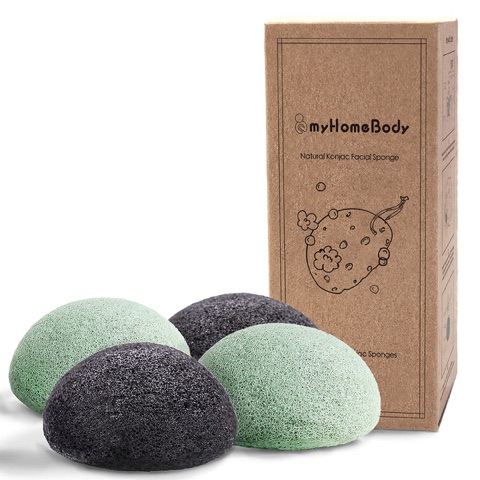
myHomeBody is the cheapest way into the format at $2.50 a sponge, against $9.99 for the pure sponge that comes second in this table. The listing names the plant, names the two infusions, activated charcoal in half the pack and aloe vera in the other half, and gives the finished size in inches[4]. On everything it can be read on it is level with the pair from The Konjac Sponge Company, and it publishes nothing about the pack, which is the single cell between it and a place in the ranking.
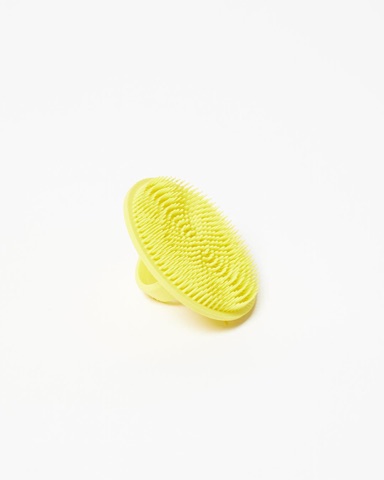
Boie is the entry here that is not konjac, and it is in the table because it is sold into the same slot at the same price. The product page describes hypoallergenic bristles that exfoliate and unclog pores and never names the material[5]. The material is on the site, in the frequently asked questions, where Boie says the Face Scrubber and Body Scrubber are made from thermoplastic elastomer and explains what that is[7]. That is the off-page case, and it is a fuller answer than most plastic facial tools give. Nothing anywhere addresses what a plastic bristle sheds down a bathroom drain over a year.
Reading each material list against the watch list splits this table cleanly in two. Every konjac sponge comes back with nothing from either tier, charcoal, clay and aloe included, because each is a named material rather than an unnamed additive[1][2][3][4][6]. Boie is the exception and it is an upper-tier one: silver is put into the bristles on purpose as an antimicrobial and described on the page as a feature, with the polymer itself named only in the brand’s questions page[5][7]. A deliberate antimicrobial on a tool used on a face every day is the tier this site keeps for the things it will not wave through. That is what puts the scrubber at the bottom of this table by some distance, and it moves nothing at the top, where we settled the order on packaging and certification.
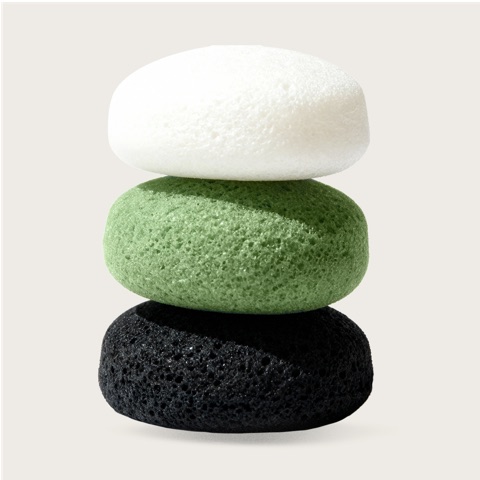
Vove is the brand that owns this site, and we have put its sponges first in this table, so the row is printed in full and the case against it with it. The product page names konjac root fibre, bamboo charcoal, green clay and a cotton string, and says which sponge each material is blended into[1], which is a full material statement, the same as every konjac page here manages. Read against the watch list the panel comes back with nothing from either tier, charcoal and clay included.
The rest of the entry is what decides the table. The pack is an FSC-certified card box, so the packaging cell is filled and the sponges can be placed at all, and they carry FSC certified packaging, a registered vegan mark and both the EU and USDA organic marks[1], which are audited product certifications rather than the company marks the rest of this shelf prints: on that row no products in this table carry a stronger row. That is what puts the sponges ahead of the pure sponge and the charcoal sponge, and it is our call rather than an arithmetic one. Cost is the row they lose, at $4.00 a sponge against $2.50 for the myHomeBody pack, which takes no card only because it never describes its box. One more thing about the Vove entry is worth printing. The rating shown on the vove.co page, 4.64 from 131 ratings, is a Judge.me group aggregate, and the same figure appears on the body sponge page and the baby sponge page as well, because the face, body and baby sponges share one review group[1][8]. Nothing on this site scores it, and nobody should read it as a figure for this sponge.
Certifications are otherwise almost absent from this shelf. The Konjac Sponge Company carries vegan and cruelty-free marks and an FSC mark on the board[2][3], and Vove carries FSC certified packaging with a registered vegan mark and the EU and USDA organic marks[1], which is the strongest certification row here because the organic marks are audited on the crop rather than registered by the company. myHomeBody, Dew Puff and Boie carry nothing on the pages we read. Awards are printed on several of these pages and none of them is a certification, so none of them is scored as one.