What this compares
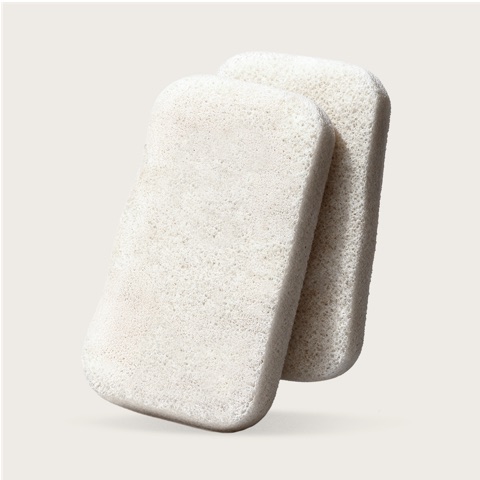
A konjac sponge arrives as a hard, pale biscuit and turns into something closer to a jelly under the shower. It is sold as the replacement for the nylon puff hanging on the rail beside it, and on material grounds that is a fair description: konjac is the swollen root of a plant, and a puff is extruded plastic mesh. What a shopper cannot do from a shelf, or from a product page, is check that description, because a sponge is an article rather than a formulation and nothing obliges its maker to declare a thing.
We took six konjac body sponges, plus one plastic scrubber sold into the same slot, and read each on the same six criteria this site uses everywhere. With no ingredient panel to read, the polyvinyl alcohol row is read on material shedding: plant fibre throughout is the answer we want, a named synthetic with nothing said about shedding is the answer we do not, and a page naming no material at all is treated the same way, because silence cannot be checked. The ingredients-of-concern row reads whatever material list a page does publish against the site’s watch list. The order below is our editorial choice, argued product by product rather than produced by a calculation, and where a brand is new or small we say so and give it the benefit of the doubt. Nothing here is a judgement on what a sponge does in a shower. No washing has been done.
What we found
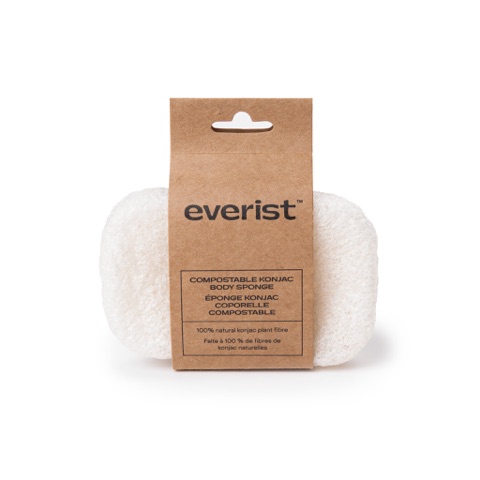
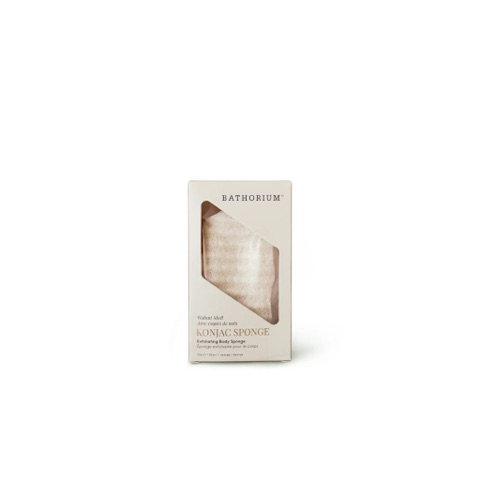
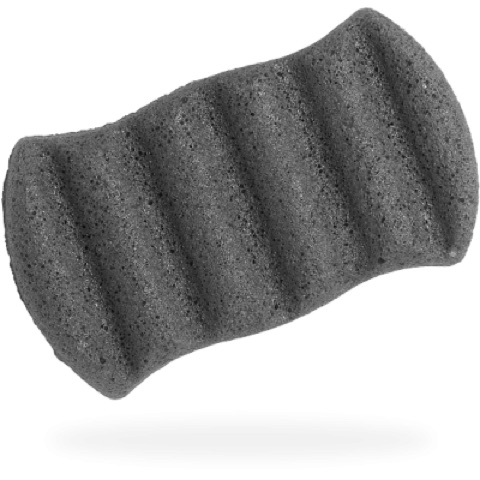
The material row is the easy one and almost everybody clears it. The Konjac Sponge Company gives the 6 Wave body sponge as pure konjac plant fibre mixed with bamboo charcoal[2]. Everist gives its sponge as 100% natural konjac plant fibre under a heading that says so[4]. Bathorium gives half the sponge as konjac and the other half as konjac infused with finely ground walnut shell[5]. Vove names konjac root fibre and a cotton string, with the job of each written beside it[1]. A category where every plant-fibre brand names its fibre is a rarity on this site, and it makes the next paragraph worse rather than better.
Packaging is where this shelf goes quiet. Three of the six sponges here have a blank packaging cell, which means the product page never described what the sponge arrives in, and a sponge whose page will not say what it arrives in is one we will not place. Only three sponges could be ranked at all. The Konjac Sponge Company clears it on the 6 Wave by not using packaging: the page opens with the line about the sponge being delivered packaging free[2]. Everist clears it by telling you to recycle the paper wrap in the same sentence as the compost instruction[4]. Vove clears it with an FSC-certified card box, the sponges loose inside on their cotton string[1]. The packaging-free line and the paper wrap are brands answering the question; the FSC mark on the Vove box is the answer being audited by somebody else.
Boie is the entry here that is not konjac, and it is in the table because it sits on the same rail at a similar price. The product page describes ultra-soft bristles with antimicrobial silver embedded in them and never names what the bristles are made of[6]. The material is on the site, in the frequently asked questions, where Boie says the Body Scrubber and Face Scrubber are made from thermoplastic elastomer and explains the name in plain terms[7]. Publishing a full answer one click away from the product page is the off-page case, and it is a better answer than most plastic scrubbers give. What no page addresses is what a plastic bristle sheds over a year in a shower, which is the one subject a synthetic in this category has to answer.
Reading each material list against the watch list is the row that moved somebody here. Every konjac sponge in the table comes back with nothing from either tier: root fibre, water, bamboo charcoal, ground walnut shell, a cotton string[1][2][3][4][5]. Boie is the exception and it is an upper-tier one. Silver is put into the bristles on purpose as an antimicrobial and described on the page as a feature[6], and a deliberate antimicrobial on a tool used on skin every day is the tier this site keeps for the things it will not wave through. That is what puts the scrubber behind every plant-fibre sponge here, including the ones that already take no card here. It does not move the top of the table, where we settled the order on packaging and certification. It does settle how far behind the plastic entry sits.
Bathorium is the dearest sponge in the table at $22.00, which is 3.1 times the cheapest sponge here, and its page does not say how long it lasts[5]. The Konjac Sponge Company does say: up to three months with good care, printed twice on the 6 Wave page[2]. Everist says two to three months of use before the sponge goes into a home compost bin[4]. Cost per sponge is therefore the weakest column on this page and we would rather say so than dress it up. It measures what a brand charges for a unit, not what a year of showering costs, and only some of these pages publish the number you would need to work the second one out.
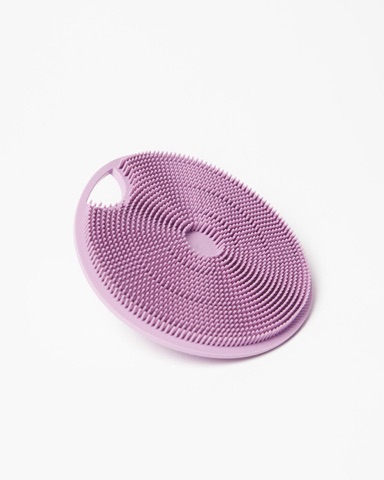
Vove is the sponge we sell, and we have put it first in this table, so the reasons are printed in full and the case against it with them. The product page names konjac root fibre and a cotton string, with the job of each written beside it[1], which is a full material statement, the same as every plant-fibre page here manages. The pack is an FSC-certified card box, so the packaging cell is filled and the sponge can be placed at all[1]. Read against the watch list the material line comes back with nothing from either tier.
The row it wins on is certification. Vove carries FSC certified packaging, a registered vegan mark and both the EU and USDA organic marks[1], and the organic pair are audited product certifications rather than the company marks the rest of this shelf prints, so no products in this table carry a stronger certification row. That is what puts it ahead of the 6 Wave and Everist here, and it is our call rather than an arithmetic one. Cost is the weaker half of the entry. The unit figure of $7.00 depends on the pack being used up, because $14.00 buys 2 sponges where $11.99 buys one, and the card box and the marks were read from the manufacturer’s certification set rather than from the product page, which describes neither.
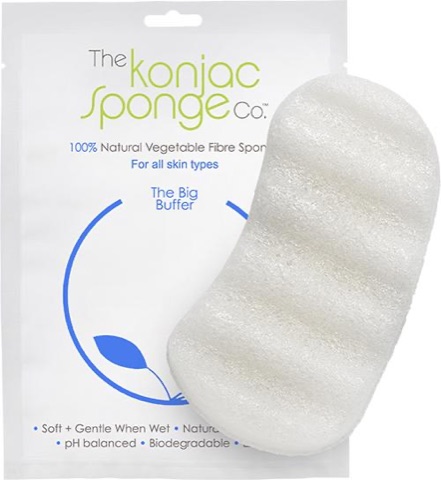
Two sponges from the same brand end up in different halves of this table, which is worth a line. The Konjac Sponge Company sells the 6 Wave at $11.99 with a packaging-free line on the page, and the Big Buffer at $23.43 with no packaging statement anywhere on its listing[2][3]. Same brand, same fibre, same claims about the plant. The difference between a product with a card and one without, here, is a sentence somebody wrote on one page and not the other.
Certifications are thin across the whole shelf, and most of the marks that exist are company marks rather than product standards. The Konjac Sponge Company prints certified vegan and cruelty free on the 6 Wave[2]. Everist prints awards, which are not certifications and count as none here[4]. Bathorium and Boie carry nothing at all on the pages we read. Vove is the exception, with FSC certified packaging, a registered vegan mark and the EU and USDA organic marks[1], which is the strongest certification row on this page. A vegan mark on a sponge made of root vegetable is not a demanding claim to verify, and we do not treat it as one; an audited organic mark asks rather more.