What this compares
The baby bath aisle runs on reassurance. Everything on it is soft, hypoallergenic, dermatologist something and suitable from birth, and almost none of it tells you what the sponge is made of, because a sponge is an article rather than a formulation and articles sit outside the rules that force a bottle of baby wash to declare itself. Konjac sponges arrived in this aisle from Korean skincare, shaped as shells and starfish and sold as the plant-fibre answer to the foam pad in the changing bag.
We took six sponges sold for babies and small children and read each on the same six criteria this site uses everywhere. There is no ingredient panel to read, so the polyvinyl alcohol row is read on material shedding: plant fibre throughout is the answer we want, a synthetic with nothing said about shedding is the answer we do not, and a page that names no material at all is treated the same way. The ingredients-of-concern row reads whatever material list a page does publish against the site’s watch list. The order below is our editorial choice, argued product by product rather than produced by a calculation, and where a brand is new or small we say so and give it the benefit of the doubt. Nothing here is a judgement on how gentle a sponge is, on skin or on anything else. No bathing has been done and no laboratory work has been commissioned.
What we found
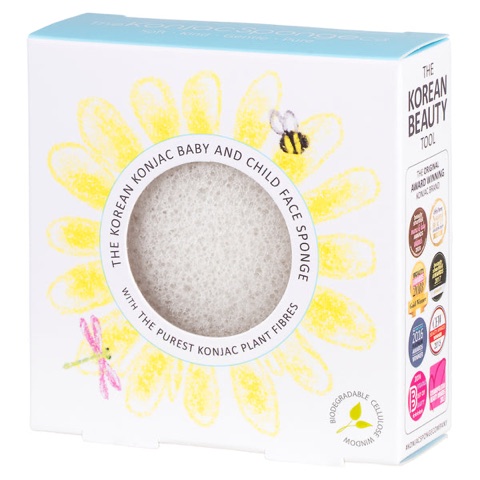
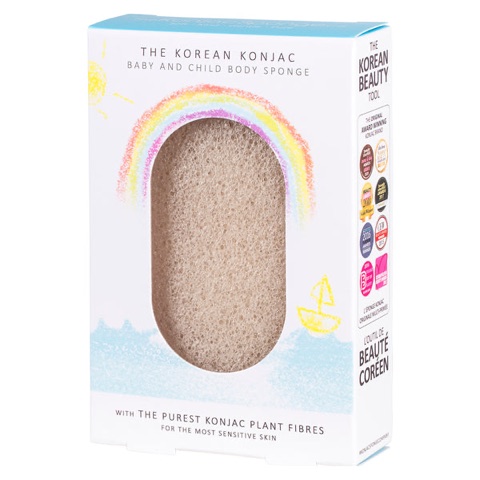
The Konjac Sponge Company writes the disclosure this category ought to have, and it writes it twice. The bath sponge page states that the sponge is pure konjac plant fibre, that no additional ingredient is used in the sponge or during manufacture, that the box is FSC board and that the little window in the box is made from cellulose and is compostable[2]. The face sponge page repeats it word for word[3]. That is a material list, a packaging statement and a component-level note on the one part of the pack a shopper would assume was plastic. The two pages read the same way on every row, so price is the only thing that separates them: the face sponge is $9.99 a sponge against $11.99 for the bath sponge, which is why we print it ahead of the bath sponge.
Beyond those two pages and the Vove box, nobody on this shelf describes the pack. Vove gives its sponges as arriving in an FSC-certified card box[1], which is the third packaging cell on the page with anything in it. Three of the six sponges here still carry a blank packaging cell, and a sponge whose page will not say what it arrives in is one we will not place, so only three sponges could be ranked at all. That is the same shape of result this site keeps finding in hardware categories: brands will happily tell you what a product is made of and go silent about the box it came in.
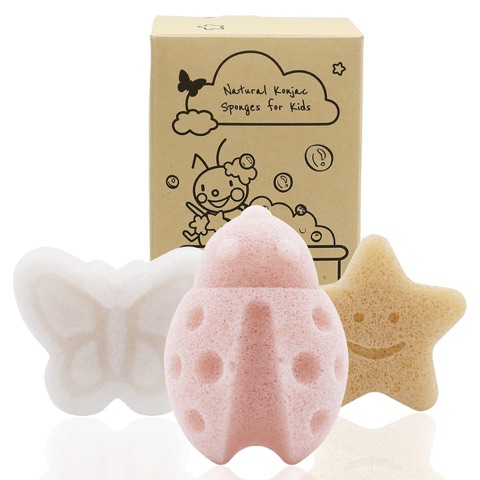
myHomeBody is the interesting near-miss. The listing names the plant, names the colourings one by one as turmeric, pink clay and pure konjac, and then tells you in the same breath that the sponges will start to fall apart and should be replaced when they do[4]. That last line is unusual and it is worth crediting: a brand describing the failure mode of its own product in the bullet list is doing something most of this aisle avoids. It still never says what the sponges arrive in, so it takes no card over a cell it could have filled in a sentence.
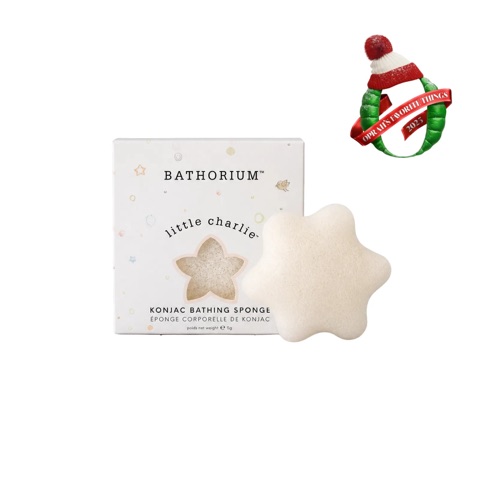
Bathorium sells a single sponge at $5.00 and the page carries the loosest material line of the plant-fibre entries. It gives the sponge as 100% natural, biodegradable vegetable fibres, and konjac appears only in the product name above it[5]. For a single-material article that is still a complete statement, so it takes the top material band, but it is the thinnest version of one here, and the page describes no packaging at all.
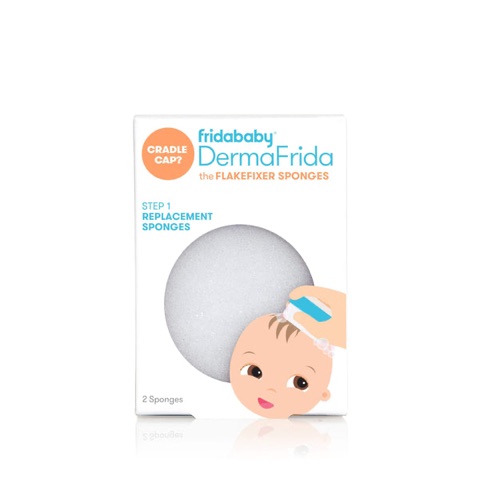
Frida Baby is in the table as the mass-market comparison and it publishes the least. The replacement sponge listing gives the pack count, the replacement interval and the three-step system it belongs to, and never names a material anywhere on it[6]. No polymer, no foam type, no shedding statement and no plastic-free claim either, so there is nothing on the page to hold it to and nothing on the page to check. That is the least any page in this table publishes about its own material, and at $3.00 a sponge it is the cheapest unit here.
Read against the watch list, this shelf is almost entirely clean. Every konjac sponge here comes back with nothing from either tier, colourings included, because myHomeBody names turmeric and pink clay and Vove names a clay and a fruit extract rather than a dye[1][4]. Nothing reaches the upper tier at all. The single flag is Frida Baby, where the only material word anywhere on the page is foam, which the list catches as polyurethane on the lower tier[6]. That is a flag for silence as much as for chemistry: the polymer is never named, so the band is set by the one word the page does publish. It counts against Frida and changes nothing at the top, where we settled the order on packaging and certification.
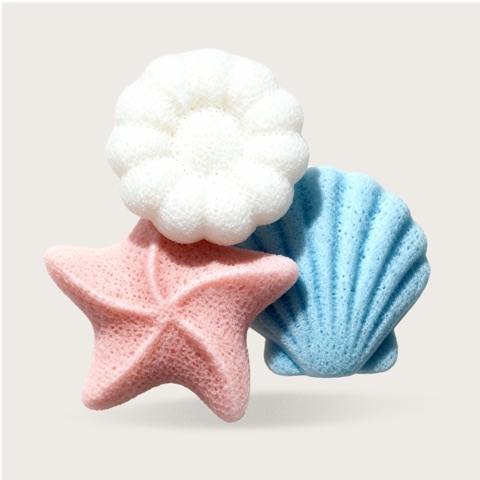
Vove is the brand that owns this site, and we have put its sponges first in this table, so the row is printed in full and the case against it with it. The product page names konjac root fibre, a natural clay and fruit-extract colour and a cotton string, with the job of each written beside it[1], which is a full material statement, the same as every konjac page here manages. Read against the watch list the panel comes back with nothing from either tier, the colour included, because it is named as a clay and a fruit extract rather than left as a dye.
The rest of the entry is what decides the table. The pack is an FSC-certified card box, so the packaging cell is filled and the sponges can be placed at all, and they carry FSC certified packaging, a registered vegan mark and both the EU and USDA organic marks[1]. The organic pair are audited product certifications rather than the company marks the rest of this shelf prints, so no products in this table carry a stronger certification row, and that is what puts the sponges ahead of the face sponge and the bath sponge from The Konjac Sponge Company. Cost is the row they lose: at $4.00 a sponge, two sponges in this table cost less, though neither of those pages describes its packaging at all. The card box and the marks were read from the manufacturer’s certification set rather than from the product page, which describes neither, and the ownership is printed on the row and under every table on this site.
Certifications on this shelf are otherwise award stickers and company marks. The Konjac Sponge Company prints vegan and cruelty-free registration alongside FSC board packaging[2][3], and myHomeBody, Bathorium and Frida Baby carry nothing at all. A vegan mark on a sponge made from a root vegetable is not a demanding claim to verify, and we do not treat it as one. An organic mark on the crop behind the fibre is audited work, which is why it counts for anything at all when a brand publishes one.