What this compares
Most kitchen drawers hold several answers to the same problem: a box of zip bags, a silicone bag somebody gave you, a beeswax wrap, and now a compostable bag that looks like plastic and is sold on not being it. They are not the same product. One is disposable, one is a buy-once item, one is for wrapping rather than bagging, and one is meant to be used a few times and then composted. A table that pretends those are interchangeable is comparing the wrong things, so this one says where the comparison breaks.
We took seven of them, six from brands selling on lower tox and one supermarket incumbent, and read each against the things a shopper can check from a product page: whether the materials are published and where, what those materials are when the list is read against the site’s watch list, what the item is made of and what the page admits about it, what one unit costs, what the packaging is made of, and which third-party marks the product actually carries. Nothing here turns on how well anything seals or how long it survives a dishwasher, because this page reads what a brand publishes, and a durability figure with nothing behind it would be a number we made up.
What we found
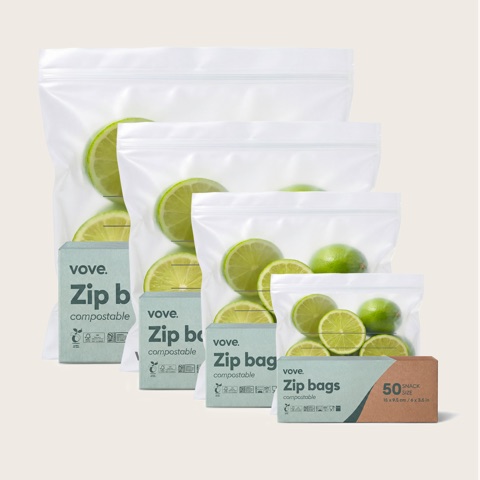
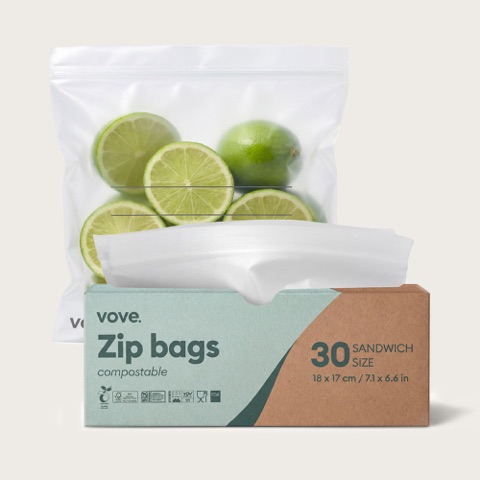
The Vove set is our choice here, and the reason flatters nobody on this page, us included. Most of the products here never say what their packaging is made of, and a brand that leaves that out gets no credit for the silence. That leaves the two Vove boxes as the only entries that answer every column. Vove takes this table mainly by being the brand that filled the form in.
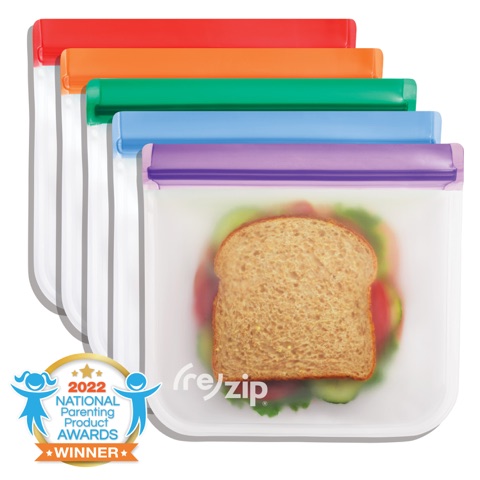
The blank row is the packaging row, and the pattern in it is strange. Stasher, Bee’s Wrap, Etee and (re)zip all sell an item whose whole pitch is replacing disposable packaging, and none of those pages describes the box, sleeve or wrapper the item itself arrives in[3][4][5][6]. Ziploc does not either[7]. There are packaging photographs on some of them, and a photograph is not a description, so the cell stays empty and the product sits below the ones that answered. It is the stance that took Molly’s Suds out of the laundry order. Here it runs in our favour.
On the row that counts for most, both Vove pages name their materials properly: PLA and PBAT film, soy-based ink, and an FSC-certified kraft box[1][2]. That is a full list on the product page, which is where most of this table sits and where Ziploc does not. Worth knowing all the same: the same copy sells the bags as plastic-free, and PLA and PBAT are bioplastics, compostable under the right conditions and plastics for all that.
One more Vove claim is worth a note of its own. Both pages carry the line made from plants, not petroleum. PBAT is a copolyester made by polycondensation of 1,4-butanediol, adipic acid and terephthalic acid, and it can be produced from either fossil or renewable resources[12]. Which route the supplier used is not on the page. So made from plants is a claim the page does not carry the evidence for, rather than one we can call false, and the difference is worth keeping straight.
Vove is the only entry here that shows a compostability mark at all, and that is genuine rather than a courtesy: no beeswax wrap and no silicone bag on this page claims a compostability certification[3][4][5]. The marks are a Seedling compostable logo and a BPI Compostable logo, in a row with an FSC mark, an ISO 9001 quality mark and, oddly, the logo of the European Chemicals Agency[1]. ECHA is a regulator. It certifies nothing, so we did not count it. Every logo in that row is an image with no caption, no alt text and no licence number against it, which is not how a licensed compostability mark is usually shown.
What those marks mean is the whole argument in this category. The Seedling runs on EN 13432, and TÜV Austria certifies to it for industrial plants held at 55 to 60 degrees C, across four tests: biodegradation, disintegration, ecotoxicity and heavy metals[9]. Home composting is a separate scheme with its own requirements, precisely because a garden heap is cooler and far less constant[10]. BPI now issues both a commercial-only certification and a commercial-and-home one, and the badge on its own does not tell you which a product holds[11]. Vove’s page says the bags can go in home or industrial compost and gives 3 to 9 months for a home setup[1]. The marks it displays do not, by themselves, carry the home half of that.
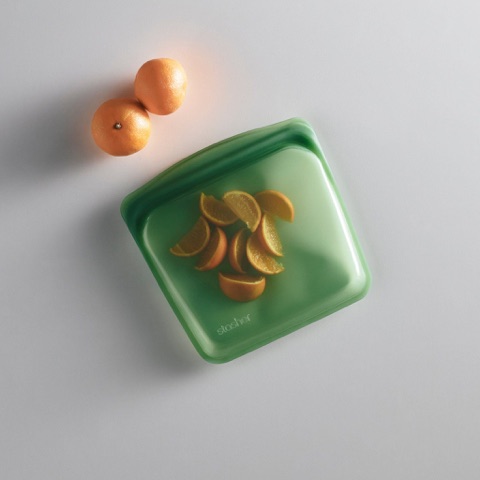
Cost per unit is the row to read slowly, because it is the row that flatters us hardest. Reuse counts differ so wildly by format that a single cost-per-use figure would have to be invented. Stasher says endlessly reusable and gives no number[3]. Bee’s Wrap and Etee give a year rather than a count[4][5]. (re)zip says hundreds of bags[6], and Vove says rinse and reuse without saying how often[1]. So we priced the thing that is actually published, which is one item. On that basis the Vove set is $0.21 a bag and the Stasher is $11.19, because a pack of it is a single bag. Divide one into the other: the Stasher draws level after roughly 53 uses and is cheaper on every use after that. If you genuinely reuse silicone, it wins this row and our table cannot show it.
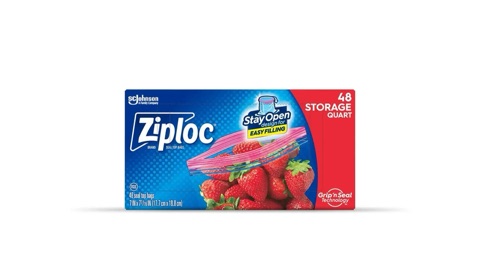
The incumbent gave us the oddest split on the page. Ziploc’s product page carries a section headed Materials that names no material. It says the bags are made without BPA or phthalates, that they meet FDA requirements, and that they are made under Good Manufacturing Practices[7]. Open SC Johnson’s What’s Inside site and the same bags have a full list with a stated purpose for every entry: low density and linear low density polyethylene for the bag and the zip, two inks for the write-on patch, two dyes for the closure[8]. That is off-page disclosure, and it is the thinnest transparency in this table: the page a shopper actually lands on names nothing, and the list that does exist is a site away.
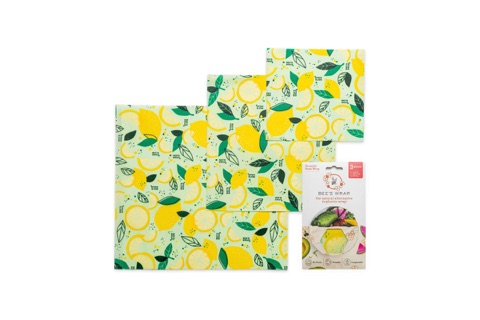
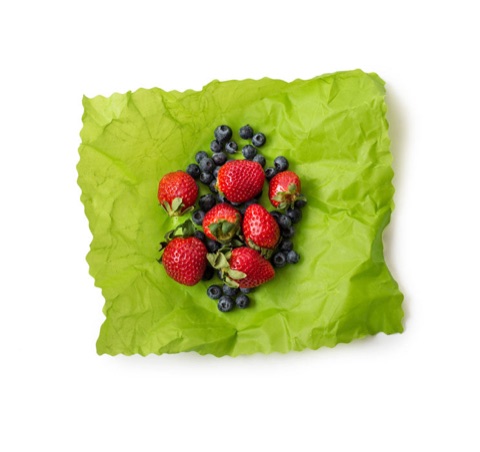
Nothing in this category contains polyvinyl alcohol, so the signature row is doing its other job here: whether the item is a conventional plastic against food, and whether the page says anything about shedding. (re)zip and Ziploc read worst on that. (re)zip is the one reusable here made of conventional plastic, and it says so plainly: food-safe PEVA, named on the page, with the BPA, lead and phthalate exclusions written out[6]. Honest labelling, and nothing anywhere on the page about shedding, which is the obvious question a plastic film invites. The two beeswax packs land close together. Etee publishes the fullest materials list on this page, five entries, with the beeswax stated as USDA certified organic[5]. Bee’s Wrap publishes four and shows no certification mark on its product page[4]. That is the whole of what separates them.
The watch list is read against a materials list here rather than a formula, and it lands lightly. Nothing in this table reaches the upper tier. Stasher is flagged on the lower tier for silicone, which is persistent rather than hazardous and is exactly what the bag is[3]. Etee is flagged for a cotton muslin dyed with something described only as non-toxic and eco-friendly[5]. Ziploc is flagged because the only material word in its Materials section is plastic[7]. The Vove boxes, the Bee’s Wrap pack and the (re)zip bag all come back with nothing from either tier, the last of those because PEVA is a named polymer even though it is a conventional one[1][2][4][6]. So the new row rewards naming the polymer rather than avoiding plastic, and on this page those are very different things.
A word on the research, because this is the category where a low-tox page is most tempted to overreach. Plastic particles have been measured in human blood, in most of the donors sampled by the 2022 study that first quantified them[13], and plastic in contact with hot liquid sheds hard: polypropylene infant bottles released up to 16.2 million particles a litre when sterilised and filled with hot water[14]. Neither finding tells you what a cold sandwich bag does in a fridge, and neither is evidence of harm. We will not stretch them, and we will not pretend a compostable bag composts wherever it lands. PLA and PBAT break down under the conditions a certification specifies, and a general waste bin is not those conditions.